

Each fact links to a numbered source at the foot of the page, checked on 18 Nov 2026. Headcount, leadership and prices change, so each carries its own date. Figures a company reports about itself are attributed to it. Read the research method.
Lovable at a glance
- Company
- Lovable · AI app builders · lovable.dev
- Founded
- 2023[2]
- Founders
- Anton Osika, Fabian Hedin[2]
- Headquarters
- Stockholm, Sweden[2]
- Employees
- 120 (as of 2025)[2]
- Ownership
- Private company backed by venture investors[2]
- Leadership
- Anton Osika (CEO), Fabian Hedin (CTO) (as of November 2026)[2]
- Funding
- A $400 million Series C in August 2026 at a valuation of $13.3 billion, after a $330 million Series B in December 2025 and a $200 million Series A in February 2025[2]
- Customers and scale
- In August 2026 the company reported hosting 60 million projects that together drew 900 million monthly visitors[2]
- Industry
- AI software development tools
- Checked
- 4 sources · facts checked · figures that change carry their own date
What does Lovable do?
Lovable describes itself as an AI software engineer that enables anyone to build for the web: a user chats with the product, and it builds a website or web app with no technical knowledge needed. [1] Credits measure usage, and one balance pays for building apps, for running deployed apps and for the AI features inside them. [1]
The product began as GPT Engineer, open-source software that Anton Osika developed in 2023 to generate a codebase from an instruction. [2][3] Osika and Fabian Hedin then built a commercial version, GPT Engineer App, and renamed it Lovable in December 2024 before launching open access. [2]
Lovable products
- Lovable app builder
- A chat interface that builds and changes websites and web apps. In the default mode the credits a message costs vary with the complexity of the task. [1]
- Lovable Cloud
- Hosting for the apps built on the platform, paid from the same credit balance as building. [1]
- Enterprise plan
- Adds directory sync, audit logs, limits on who may publish and invite, scheduled deep security scans and a named customer success manager with onboarding and deployment. [1]
- Education offers
- Lovable for students, Lovable for campus and Lovable for kids, the last one in partnership with imagi. [1]
Who uses Lovable?
The pricing page speaks to four kinds of buyer: people discovering the product on the Free plan, fast-moving teams building together, growing departments that want advanced controls, and large organizations needing flexibility, scale and governance. [1]
One published customer story describes an internal champion at Nursa winning the chief executive’s support, after which usage spread across departments. [4]
How does Lovable make money?
Lovable sells subscriptions that come with usage credits. Every plan belongs to a workspace, and everyone invited into that workspace shares its credits, so plans are not priced per collaborator. Large organizations buy an Enterprise plan with a platform fee and volume based pricing. [1]
How much does Lovable cost?
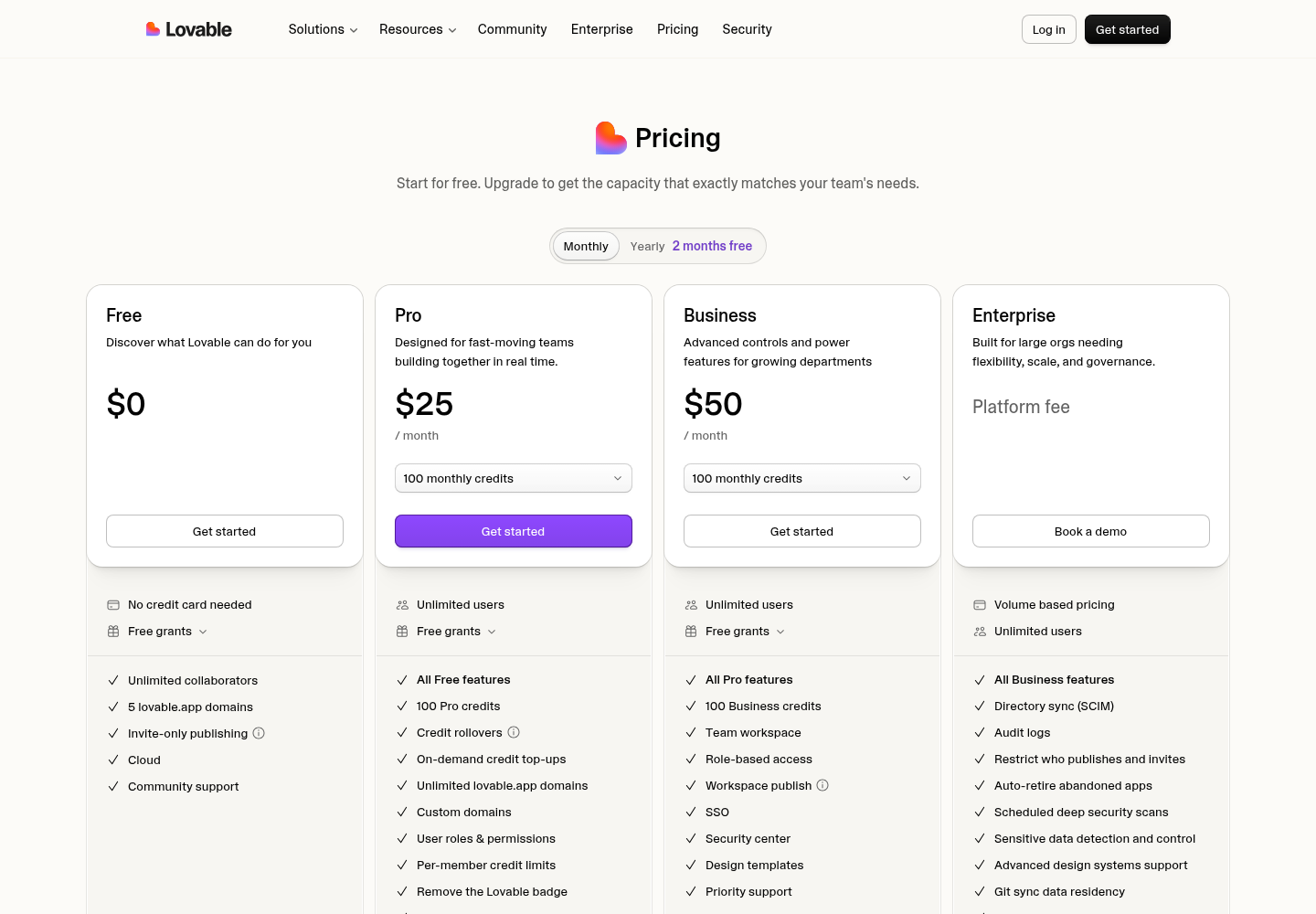
As of November 2026 Lovable lists a Free plan at $0, Pro at $25 per month and Business at $50 per month; each paid plan starts with 100 monthly credits. Enterprise is sold through a demo, with a platform fee and volume based pricing. [1]
Free accounts receive 5 build credits a day, capped at 30 a month, and 20 Cloud credits each month. Yearly billing is advertised with 2 months free, and verified students can get up to 50% off Lovable Pro. [1]
| Plan | Price | What it includes |
|---|---|---|
| Free | $0 | Free grants, unlimited collaborators, 5 lovable.app domains, invite-only publishing |
| Pro | $25 per month | 100 monthly credits, credit rollovers, custom domains, user roles and permissions |
| Business | $50 per month | 100 monthly credits, team workspace, SSO, security center, priority support |
| Enterprise | Platform fee and volume based pricing | Directory sync (SCIM), audit logs, EU inference, named CSM, custom SLA |
Prices are a dated observation: what Lovable listed on . They change; check the company’s own page before relying on them. [1]
Lovable history
Lovable has raised three large rounds in under two years. Accel led a $200 million Series A in February 2025, which valued the company at $1.8 billion. CapitalG and Menlo Ventures led a $330 million Series B in December 2025 at $6.6 billion. In August 2026 Menlo Ventures and the Scaleup Europe Fund led a $400 million Series C that valued Lovable at $13.3 billion. [2]
In March 2025 a security vulnerability was found in websites created with Lovable: many sites that connected to the Supabase database platform had not configured access controls correctly, which made their contents public. Lovable responded by checking websites for access controls automatically. [2]
Lovable timeline
How did Lovable grow?
An open-source audience became a self-serve market—and then an enterprise buying journey.
Lovable’s early distribution grew out of GPT Engineer, Anton Osika’s open-source project. A browser product widened the audience from technical experimenters to people who wanted working applications without coding. Its later offer adds governance, named customer success managers and deployment support. This case separates documented acquisition and expansion mechanisms from analytical conclusions about why they worked. Revenue milestones are dated, attributed claims—not audited unit economics.
This research classifies Lovable as Product Led, Human Led and Partner Led. Motion labels describe routes across segments and periods, not measured revenue shares. Acquisition channels and operating patterns are shown separately in the case.
This part restates the GTM Unpacked research case on Lovable (deep research, research date ). Its evidence and source numbers are in the case.
Read the Lovable GTM case How did Lovable turn an open-source audience into customers?
Lovable website snapshots
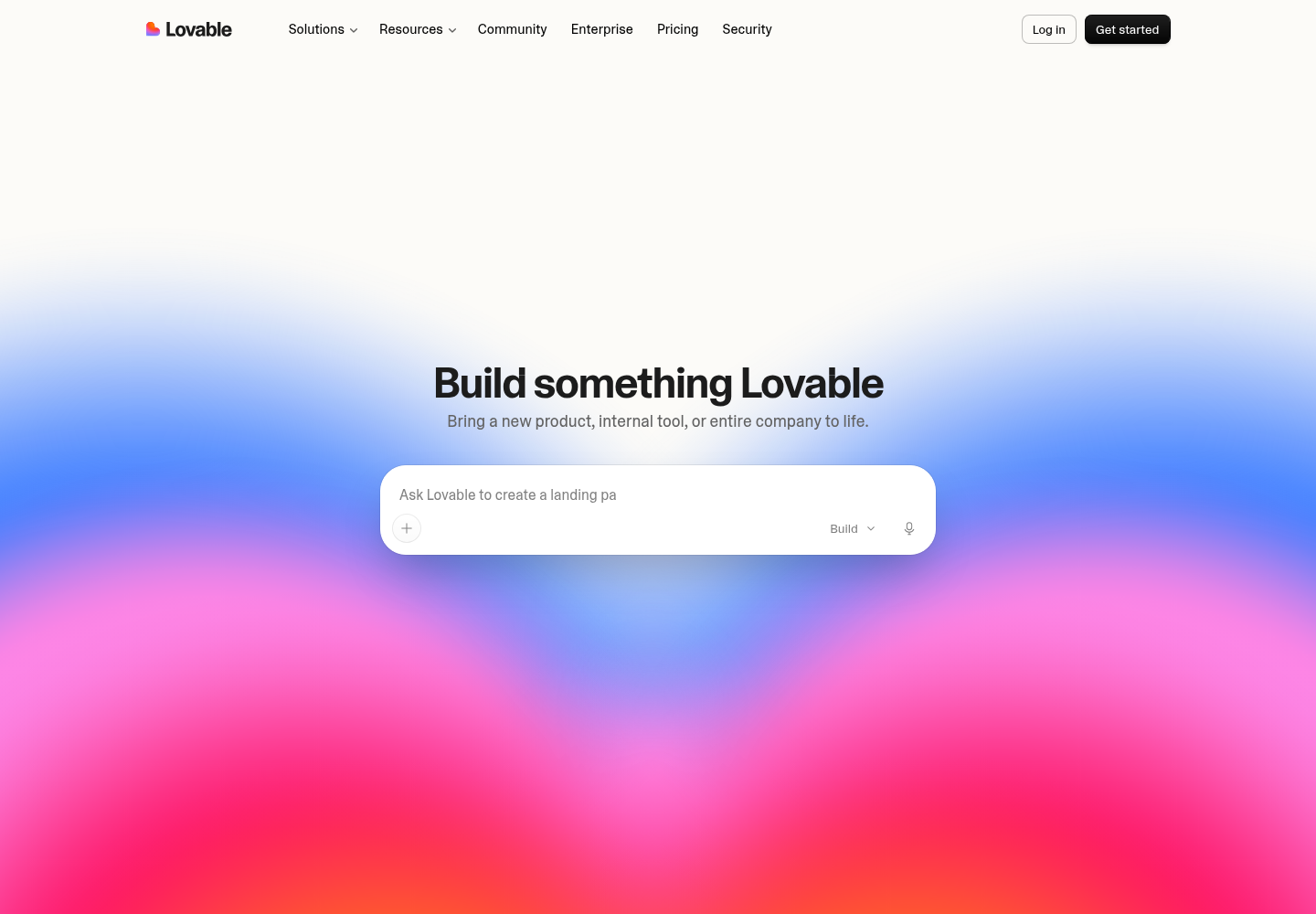
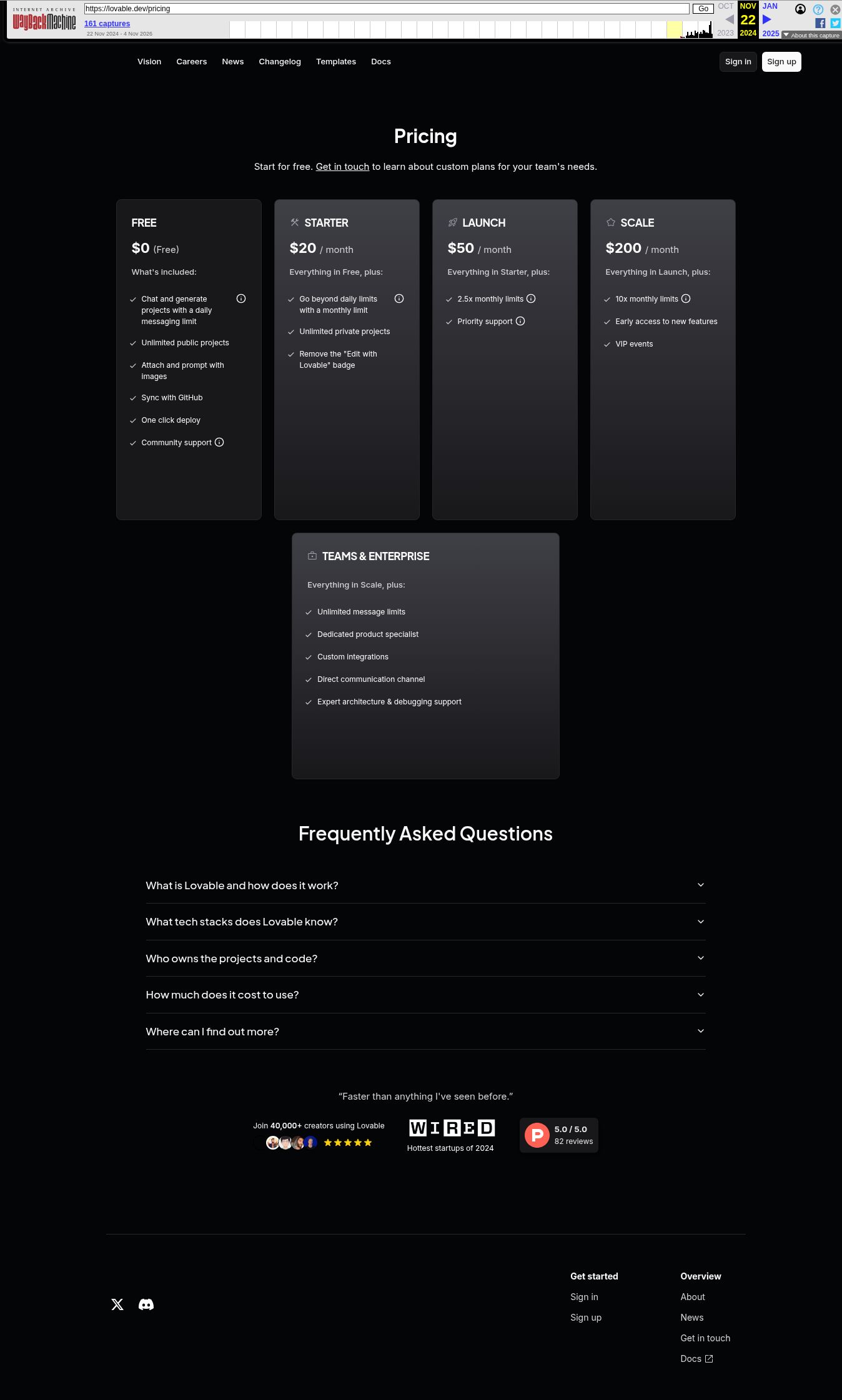
Captures collected for the research case. Each caption carries its own date and source. Explore the visual archive
Lovable: frequently asked questions
What is Lovable?
Lovable is a Swedish software company whose AI app builder lets people create websites and web applications by describing them in a chat. It was founded in Stockholm in 2023 by Anton Osika and Fabian Hedin, and it grew out of the open-source project GPT Engineer. [1][2]
When was Lovable founded?
Lovable was founded in 2023. [2]
Who founded Lovable?
Lovable was founded by Anton Osika and Fabian Hedin. [2]
Where is Lovable headquartered?
Lovable is headquartered in Stockholm, Sweden. [2]
How many employees does Lovable have?
Lovable had 120 employees as of 2025. [2]
Is Lovable free to use?
Yes. Lovable has a Free plan at $0 that needs no credit card and includes free grants of credits; the first paid plan, Pro, costs $25 per month. [1]
How much does Lovable cost?
As of November 2026 the Pro plan costs $25 per month and the Business plan $50 per month. The Enterprise plan has a platform fee and volume based pricing. [1]
Is Lovable a public company?
No. Lovable is a private company; its investors include Accel, CapitalG and Menlo Ventures. [2]
What was Lovable called before?
The product was first released as GPT Engineer App, a commercial version of the open-source GPT Engineer, and was renamed Lovable in December 2024. [2]
Sources
Every source was read on 18 Nov 2026. These numbers belong to this profile; the Lovable GTM case has its own source list.
- Lovable Pricing Lovable · company source
The company’s own description of the product, its plans and prices, the credit rules and the offers for students and schools.
- Lovable (company) Wikipedia · reference work
Founding year and place, founders, key people, headcount, the renaming from GPT Engineer App, the funding rounds and the 2025 security report.
- How we built Lovable, and why we keep rebuilding it Lovable / Anton Osika · company source · published November 4, 2026
Anton Osika’s own account of GPT Engineer as the origin of the product.
- How Nursa built a new product in 48 hours Lovable · company source
A customer story in which an internal champion wins executive support and usage spreads across departments.