
Source numbers link to evidence. [Inference] marks analytical judgment, including motion classifications and causal explanations. Public evidence does not establish every internal decision or metric.
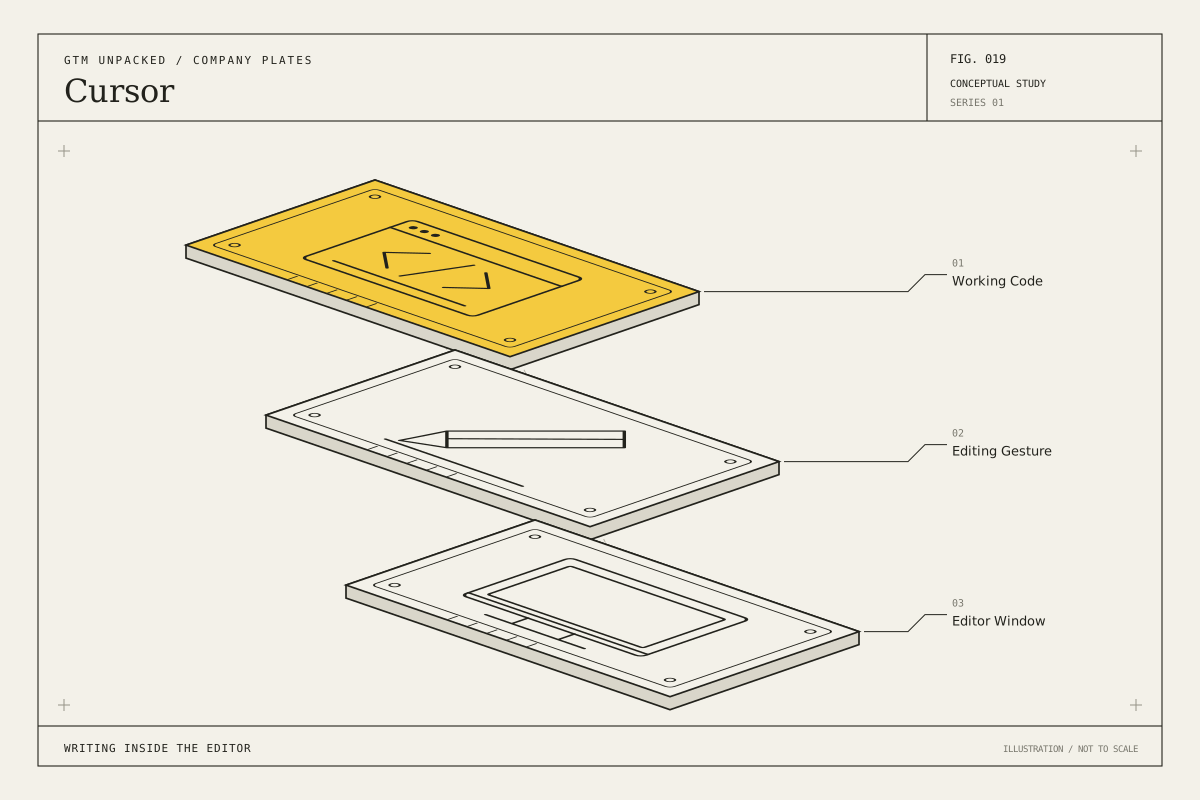
Conceptual illustration of an editor as a writing instrument for software, combining code marks, a pen and a screen in one focused composition.
- Company
- Cursor, also listed as Cursor (Anysphere) · AI developer tools · cursor.com
- Conversion motions
- [Inference] This research classifies Cursor as Product Led and Human Led.
- Cursor beachhead
- Professional programmers willing to try an AI-native editor for their own daily coding work; not a verified first paying customer list.
- Cursor target customer
- Individual developers, engineering teams, and enterprise software organizations; later expansion into product, design and QA. [5]
- Product complexity
- The initial editor was familiar to programmers; codebase indexing, cloud agents, model selection and enterprise administration make organization-wide deployment materially more complex. [5][6]
- Decision-making unit
- [Inference] One developer can buy a personal subscription. Enterprise rollout brings engineering productivity, security, IT, procurement and budget owners into the decision. Cursor's CFO Council makes the finance layer explicit. [4][5][7]
- Market at entry
- [Inference] AI-assisted coding existed, but the choice to rebuild the editor around AI rather than add a chat window was still a contested product thesis in 2023. [1][2]
- Market today
- A commercially developed market with individual, team and enterprise products, agent workflows, governed deployment and a growing need to explain variable AI expenditure. Cursor's current site also reflects its SpaceX ecosystem integration. [4][8][14]
- Evidence
- Deep research · 14 linked sources · research date · method and limitations
The ten-step Revenue Engine reading map
These links locate relevant evidence. A linked section does not imply every detail of the step is publicly established.
- Acquire Your First Customers: Founder Led Sales Read first customers
- Embrace GTM Experimentation Read experiments & lessons
- Understand Your GTM Motion Options Read GTM motion
- Pick Your GTM Motion Read beachhead & buyer · Read product & market
- Generate a Lead Read GTM motion · Read experiments & lessons
- Turn Leads into Paying Customers Read GTM motion · Read people & process
- Retain and Grow Your Customers Read retain & expand
- Build Your GTM Team Read people & process
- Plan Your Tech Stack Read experiments & lessons · Read people & process · Read product & pricing archive
- Optimize and Scale Through Metrics Read pricing & economics
Cursor GTM timeline: From wedge to engine.
Downloadable editor beta
Archived site offers desktop beta, community links and an Enterprise inquiry path. [9]
Developer word of mouth
Investor retrospective describes acceleration through developer recommendations. [2]
Pricing model changes
Request allowance becomes usage-based; July apology follows customer confusion. [12]
Field revenue leadership
Brian McCarthy joins to lead global revenue and field operations. [3]
Finance buyer education
Cursor announces a CFO Council on AI value and cost. [4]
SpaceX integration
Cursor announces it is part of SpaceX. [14]
Cursor origin and first customers: Founder discovery before a repeatable growth motion
Michael Truell's public Lenny interview describes an early pivot from mechanical-engineering/CAD ideas to coding, where the team understood the user much better. The founders used their own editor constantly; dogfooding and custom autocomplete models became central product disciplines. The accessible episode summary supports that account, but does not disclose a named first paying customer or a founder's first signed contract. [1]
Investor a16z's retrospective identifies the MIT founding group as Truell, Sualeh Asif, Aman Sanger and Arvid Lunnemark. It describes experiments with AI email and CAD, an early-2023 Hacker News debut with only 11 comments, and a much stronger word-of-mouth wave in 2024. One memorable anecdote is a Japanese user arriving at a meetup with a book he had written about Cursor. This is an investor's recollection, not an independently measured acquisition funnel. [2]
[Inference] The founder-led element was unusually close to product discovery: founders were sophisticated users, could observe failure directly, and could turn feedback into editor changes. It is not evidence of a classic founder prospecting enterprise accounts. The book's first-customer step should therefore be marked partially observed, rather than retrofitted into an outbound-sales story.
[1] [2]Cursor beachhead and buyer: A narrow user, a broad account
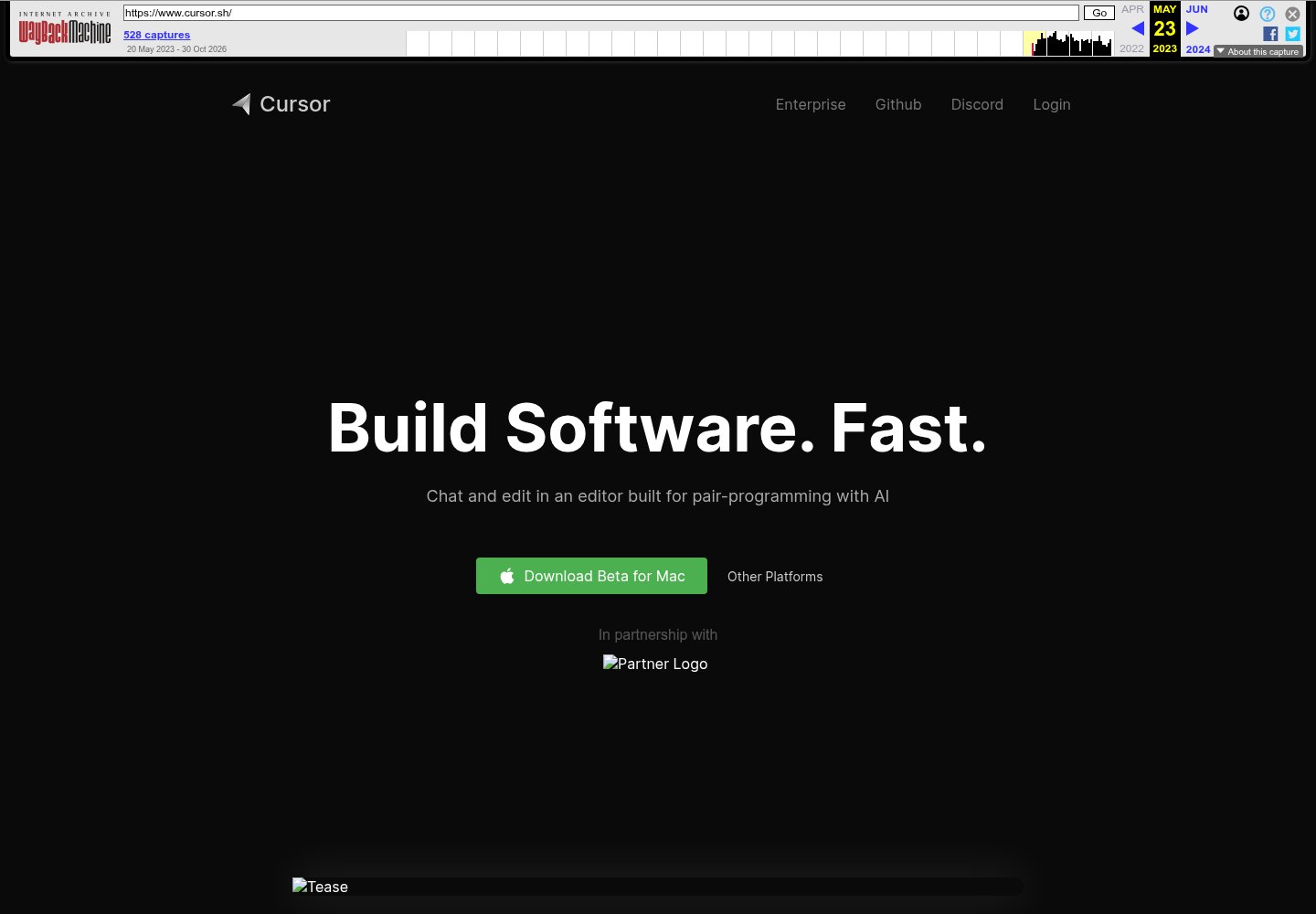
The archived May 2023 site offered a downloadable beta for Mac, Windows and Linux and positioned chat and editing inside a pair-programming editor. It linked to GitHub and Discord, but also already had an Enterprise contact link. The initial public doorway was a programmer trying software; enterprise intent was present before the later field organization. [9]
Money Forward's customer story illustrates how the beachhead could expand. Staff Engineer Aaron Li demonstrated agents at an engineering all-hands; the company then evaluated tools through its Engineering Productivity and AI Research department, led by Tran Ba Vinh Son. Adoption moved into QA, design and product. Cursor reports more than 1,000 daily users at that account; the case is promotional customer evidence, not an audited productivity study. [5]
[Inference] The account is the expansion unit, while the first user is the acquisition unit. This distinction explains why an individual developer's willingness to try the tool does not settle the organization's later security, procurement or budgeting questions. A successful first session produces a potential champion, not automatically a qualified enterprise opportunity.
[5] [9]Cursor GTM motion: Product-led entry, human-led standardization
By February 2026 Cursor said it served more than 50,000 teams and that nearly 70% of the Fortune 1000 appeared in its customer base. It hired Brian McCarthy as President of Global Revenue and Field Operations explicitly to support enterprise demand. Presence in a customer base should not be read as company-wide standardization at every logo. [3]
a16z describes a dramatic change in revenue mix: over 80% consumer at the start of 2025, nearly 80% business by the 2026 SpaceX relationship. It also describes substantial expansion within early enterprise cohorts. These are investor claims; they do not establish a generally reproducible net-retention rate or a disclosed sales funnel. [2]
[Inference] The conversion mechanism became hybrid. Download, trial and personal payment remain product-led. Standardization, commitments and governed rollout require human selling and implementation. Word of mouth, meetups and workshops generate demand, but are channels rather than separate proof that marketing closes the contract. The appropriate motion follows buyer complexity and account potential, not an ideological commitment to PLG.
[2] [3]Cursor product and market: Agent capability changed the buyer's problem
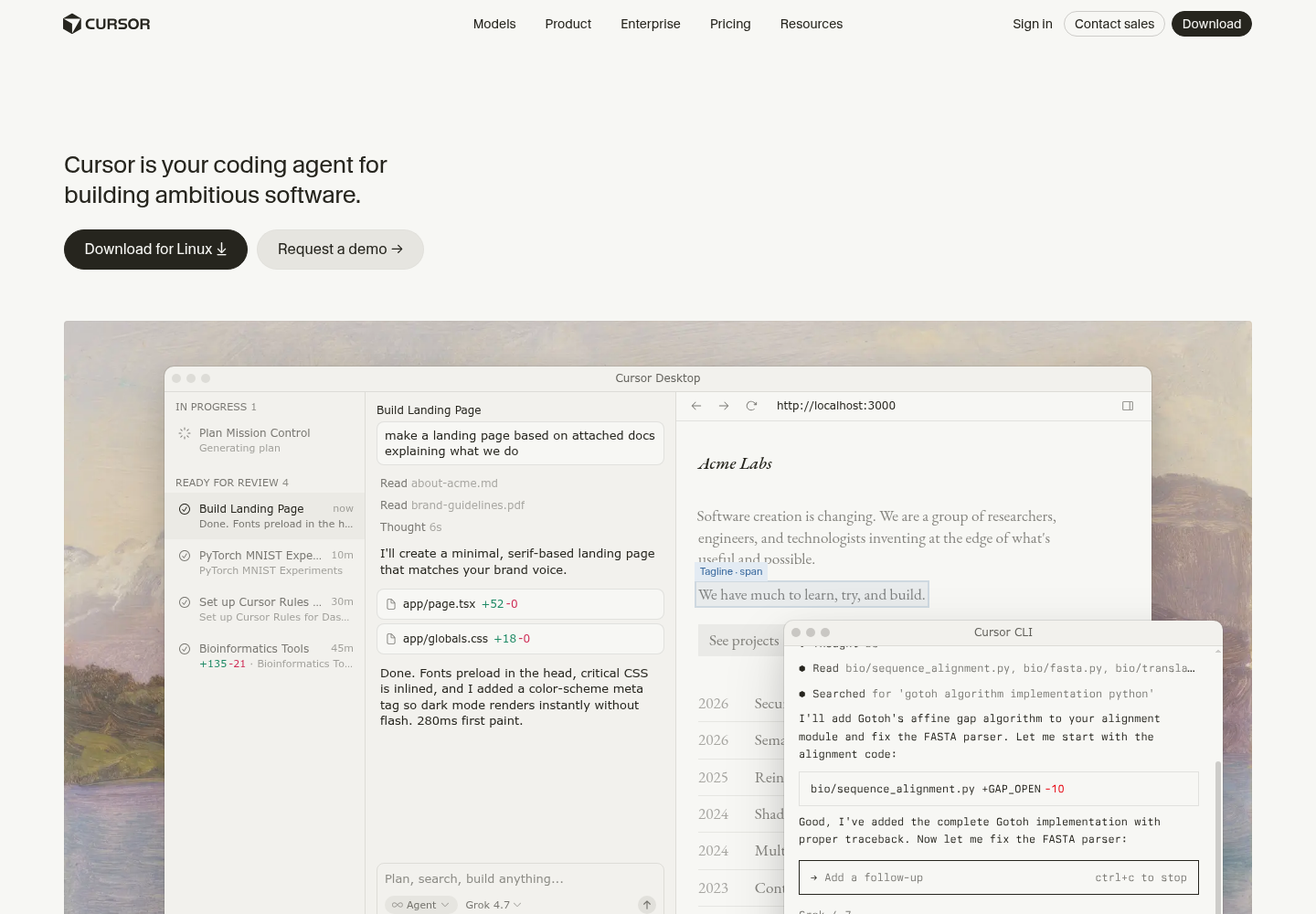
Cursor's current product surface includes agents, code review, CLI, cloud agents, teams and enterprise. Its enterprise administration documentation covers identity and rollout requirements; the live price page distinguishes personal plans, shared team usage and custom enterprise arrangements. [7][8]
Jordan Topoleski's July 2026 CFO Council announcement frames AI as recurring expenditure with uneven adoption and variable cost. The proposed quarterly meetings focus on benchmarks, productivity measurement, model allocation and cost control. This is a concrete move toward educating the economic buyer. The correlations in the announcement are not proof that buying Cursor causes higher revenue. [4]
[Inference] As the product moves from suggesting code to executing longer tasks, value can rise while the invoice becomes harder to predict. The market is more mature commercially, but there remains a measurement problem: generated lines or tokens are activity, not accepted business value. A credible enterprise sale must connect usage to delivered work, quality and review burden.
[4] [7] [8]Cursor people and process: Technical founders added enterprise operators
McCarthy brought more than two decades of GTM experience. Cursor identifies him as former President and CRO of Rubrik, CRO of ThoughtSpot during its SaaS transition, and an earlier leader at AppDynamics and Qlik. His appointment supplies direct evidence of a deliberate field-sales buildout. His individual education and Cursor quota outcomes were not verified. [3]
Support engineers Kody Fisher and Zach Hudson describe Cursor's own support workflow: repositories, logs, customer account context and past conversations converge in the editor. Named integrations include Datadog for diagnosis, Notion for runbooks, Slack for prior cases and Linear for engineering escalation. Support staff review the resulting outputs. The authors estimate 5–10 times throughput and say over 75% of interactions use Cursor; these are internal company estimates. [10]
[Inference] The organizational complement is clear: founders optimized the developer experience, experienced revenue leadership addressed enterprise coordination, and technical support converted product knowledge into repeatable service. It would be premature to infer a specific CRM, compensation plan, SDR-to-AE ratio or renewal ownership structure; those were not disclosed in the sources reviewed.
[3] [10]Cursor retention and expansion: Make adoption an organizational habit
At Dropbox, engineers were already sharing Cursor experiments in Slack and internal write-ups in 2024. CTO Ali Dasdan formalized AI champions and reduced access friction. During an April 2025 hackathon, he personally built a smart-finder prototype in about two hours, according to Cursor's customer story. The subsequent challenge was indexing a monorepo exceeding 550,000 files, rather than merely handing out subscriptions. [6]
Cursor's workshop catalog includes role-specific education: Amrita Venkatraman teaches cloud-agent and data-science workflows, Tim French covers administration and technical interfaces, and James Lark appears in enterprise-oriented sessions. These named instructors are evidence of structured enablement; the catalog alone does not establish their full employment histories or account-manager roles. [11]
[Inference] Expansion is strengthened when customers create internal teachers, leaders experience the product themselves and platform teams remove deployment obstacles. The Dropbox and Money Forward stories show distinct mechanisms: deeper engineering penetration and adjacent-role expansion. Neither supplies renewal rates, contract uplift or a causal comparison against customers without enablement. [5][6]
[5] [6] [11]Cursor pricing and economics: The subscription promise met compute variability
On July 4, 2025 Cursor apologized for confusing communication around its June 16 pricing change. The change moved Pro from a 500-request model to a $20 allowance of frontier-model usage with a separate Auto path at that time. Users misunderstood descriptions of unlimited use. Cursor offered refunds for unexpected charges during the stated transition window and promised clearer usage visibility. [12]
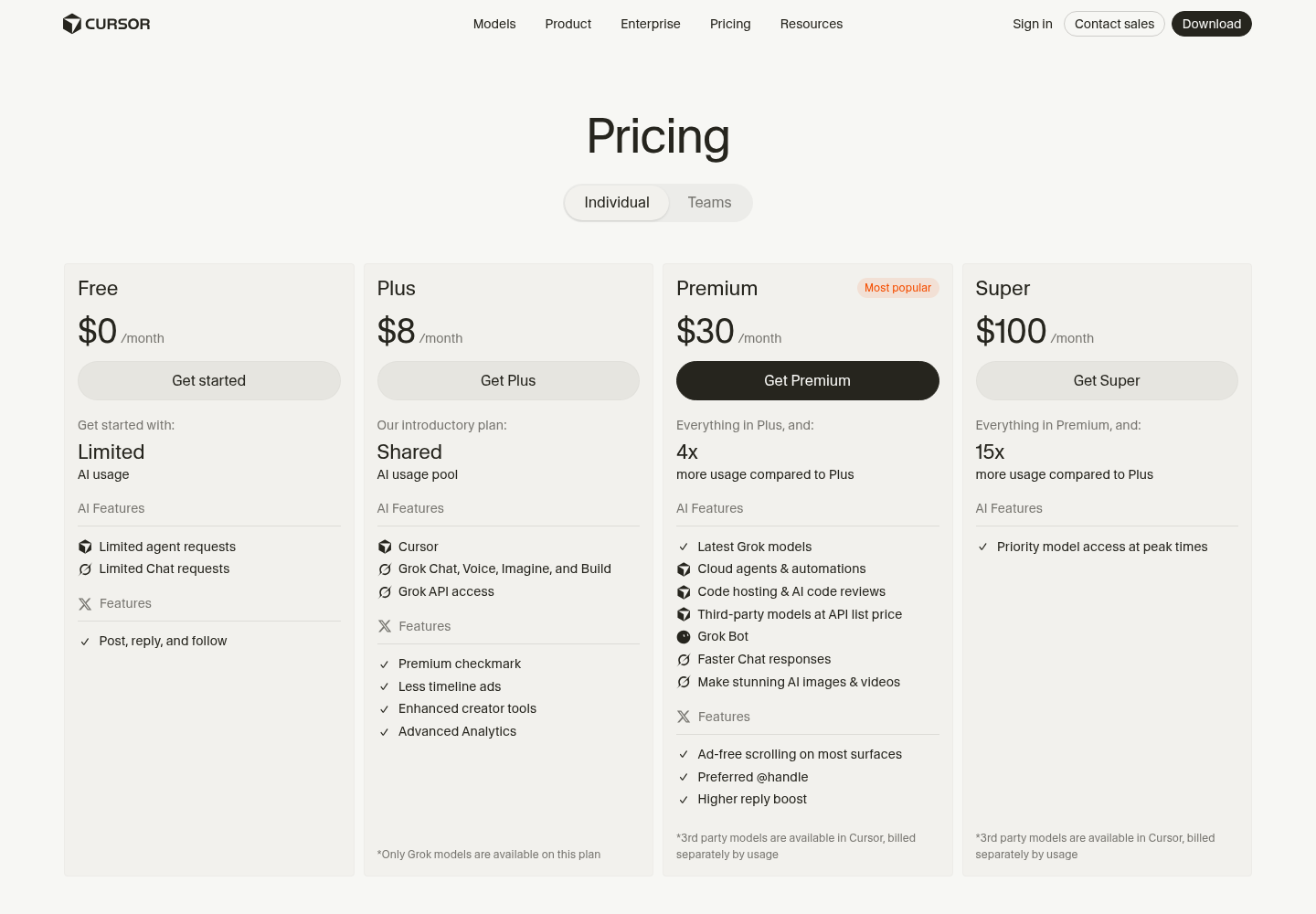
The live page captured on November 10, 2026 shows a later combined Cursor/Grok/X ladder: Free, an $8 Plus offering centered on Grok, $30 Premium, $100 Super and $200 Ultra; Teams starts at $30 per user and Enterprise is custom. Third-party model use is separately described at API pricing. These are current advertised terms, not the prices that powered 2023 or 2025 adoption. [8]
[Inference] The economics favor product-led acquisition for a low-priced individual seat, with human effort concentrated where account expansion can support it. Longer agent runs create variable service costs, making usage caps, model routing and spend controls commercially important. Public evidence here does not verify gross margin, CAC, CAC payback or cohort retention; revenue growth alone cannot establish profitable acquisition.
[8] [12]Cursor experiments and lessons: What the growth system learned
The most consequential documented early experiment was changing the product problem from CAD to coding. Later, the company added a revenue leader and finance-buyer education as adoption spread into larger organizations. These are observable changes in product focus, team and buyer engagement, rather than evidence of a fully published experiment backlog. [1][3][4]
The pricing apology is a specific failure with an observable response: the service's economic model changed faster than customers' understanding. Meanwhile, the support team turned its own product into an operational tool, using reusable commands and contextual retrieval to reduce repeated investigation work. [10][12]
[Inference] A stronger operating scorecard would separate activated developers, sustained weekly users, qualified multi-user accounts, rollout completion, accepted-work quality and expansion margin. Optimizing downloads or agent messages alone could reward expensive activity without durable account value. The public record does not provide these funnel conversions or sales-cycle durations.
[1] [3] [4] [10] [12]Cursor website and pricing history: From beta download to governed AI platform
The actual May 23, 2023 Wayback capture shows an editor beta with download buttons and developer-community links. Some images were unavailable in the archive rendering; the evidence is intentionally shown as captured. The November 2026 homepage and pricing screenshots show a broader agent platform and a substantially changed commercial ladder. [8][9]
Cursor's August 14, 2026 announcement says it is now part of SpaceX. That strategic change matters when interpreting today's bundled pricing and distribution. The current page should not be used as a proxy for the independent startup's original GTM. [14]
[Inference] Cursor's transferable achievement is the sequence: win a technically demanding user's daily workflow, make that user an internal advocate, then invest in governance, enablement and enterprise selling. The boundary condition is real user preference; adding a sales team before the product earns repeat use would not recreate this history.
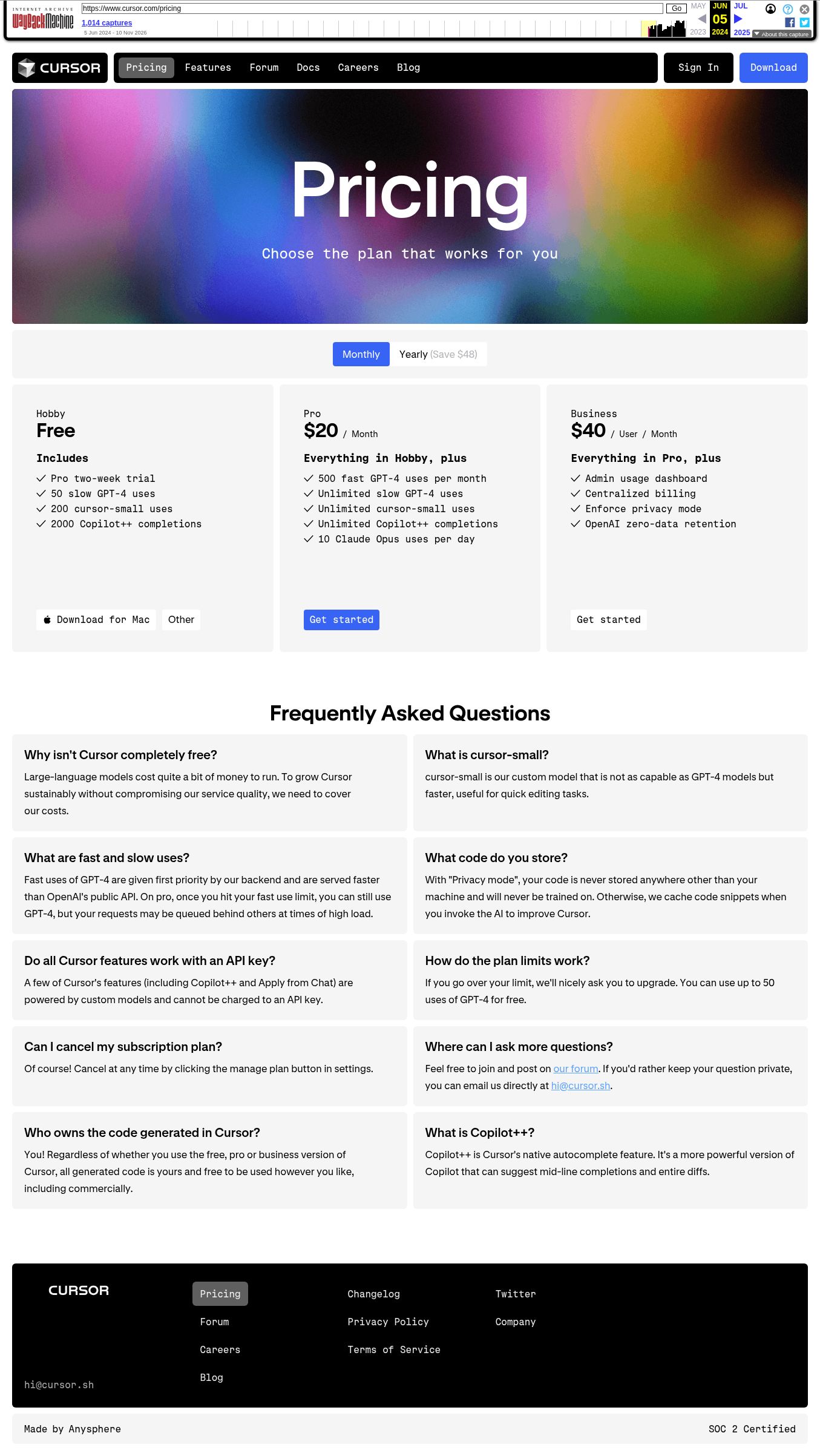
The June 5, 2024 pricing capture shows Hobby free, Pro at $20/month, and Business at $40/user/month with the monthly selector active. Pro combined fast-use limits with unlimited slower access; Business added administration, consolidated billing, and privacy controls. The FAQ explicitly explained that model-serving costs motivated charging for the product. [15]
[Inference] The 2024 offer made response priority and organizational controls separate reasons to pay. Later usage changes and the 2026 bundle should be evaluated against that historical promise, while recognizing that the products and included models also changed. [15]
[8] [9] [14] [15]Cursor economics at a glance: Pricing is only half the story.
Nov 10, 2026: combined ladder includes $30 Premium, $100 Super, $200 Ultra; Teams from $30/user; Enterprise custom. July 2025 Pro economics differed. [8][12]
Subscription plus variable model usage and enterprise contracts.
[Inference] Agent inference and support costs grow with workload; model mix and governed usage influence contribution margin.
Not publicly verified in reviewed sources.
No audited NRR, churn or retention cohort disclosed in reviewed sources. Investor expansion anecdotes are not an NRR series.
The people in the Cursor GTM story: People & capabilities.
Michael Truell
Co-founder and CEOMIT founding group; public Lenny interview covers product focus, dogfooding and hiring for curiosity. [1][2]
Led the product thesis around an AI-native editor; the public account does not identify his first closed sale.
[1] [2]Sualeh Asif, Aman Sanger and Arvid Lunnemark
Co-foundersMIT colleagues named in a16z's founding history; individual credentials beyond this were not verified for this case.
Part of the founding technical team that iterated from earlier ideas to the editor. [2]
[2]Brian McCarthy
President of Global Revenue and Field OperationsFormer President/CRO Rubrik, CRO ThoughtSpot, and leader at AppDynamics and Qlik; 20+ years enterprise GTM experience.
Hired February 2026 to scale enterprise adoption and field operations.
[3]Jordan Topoleski
COO; CFO Council authorIdentified as COO in investor retrospective; further education and prior-role detail not verified here.
Introduced finance-leader education around AI value, variable spending and measurement.
[2] [4]Kody Fisher and Zach Hudson
Technical support practitionersAuthors of Cursor's support operating account; prior employers and training not verified.
Documented code-aware support with Datadog, Slack, Notion and Linear integrations.
[10]“We missed the mark.”Michael Truell, on pricing communication [12]
Cursor GTM: critical reading and analysis: Why it worked.
Where it breaks.
What worked—and why
[Inference] Developer advocacy supplied credible entry into accounts before centralized procurement. Customer cases show how internal champions turned usage into broader rollout. [5][6]
[Inference] Enterprise leadership was added to an existing adoption base, giving field sales concrete product value to organize around. [3]
What did not work
Cursor acknowledged that June 2025 pricing communication confused customers and offered refunds for unexpected transition charges. [12]
The early Hacker News launch generated little discussion in the investor retrospective; a launch event alone was not the growth engine. [2]
What could have been better
[Inference] Preview invoices and explicit workload examples before pricing changes would make variable AI spending easier to evaluate. Measure confusion and surprise bills alongside conversion.
[Inference] Publish deployment outcomes with review time and quality controls, so adoption metrics do not stand in for realized value.
What another founder can use
[Inference] Use individual adoption as a source of account intelligence; introduce human selling where governance and organizational coordination become the bottleneck.
[Inference] Treat support and enablement as part of expansion capacity, with technical context connected to the customer's workflow. [10][11]
Cursor website and pricing captures: Product, positioning & pricing.
Captures and image sources are dated individually. Historical gaps are kept explicit. Explore the visual archive
Cursor go-to-market FAQ: The questions that matter.
How did Cursor get its first customers?
Public evidence shows a downloadable beta, founder dogfooding and developer word of mouth; it does not identify the first paying customer. [1][2][9]
Is Cursor product-led or sales-led?
Both: individual adoption is product-led, while enterprise standardization is supported by field leadership, governance and enablement. [3][7][11]
What is Cursor's clearest GTM mistake?
Its July 2025 apology documents confusion around the June pricing change and refunds for unexpected charges. [12]
Cursor sources and open questions: Follow the sources.
- The rise of Cursor | Michael Truell Lenny's Newsletter · interview · 2025-05-01
Public episode summary: CAD-to-coding pivot, dogfooding, custom models, hiring; paid full takeaways not accessed.
- Cursor × SpaceXAI: The Fastest Iterating Team Wins Andreessen Horowitz · primary · 2026-08-14
Investor retrospective on MIT founders, early launch, word of mouth, revenue mix and expansion; interested-party perspective.
- Brian McCarthy joins Cursor Cursor · primary · 2026-02-09
Revenue/field leadership hire, previous employers and company adoption claims.
- CFOs and the new economics of AI Cursor · primary · 2026-07-06
Jordan Topoleski's CFO Council and variable-cost/value discussion.
- Money Forward brings Cursor's coding agents to product, design, and QA Cursor · primary · 2026-03-18
Aaron Li demonstration, Tran Ba Vinh Son's evaluation team, cross-function expansion.
- Dropbox uses Cursor to index over 550,000 files Cursor · primary · 2026-01-26
Bottom-up engineering use, Ali Dasdan champions, hackathon and codebase deployment.
- Enterprise admin setup guide Cursor · primary
Enterprise identity, administration and rollout requirements.
- Cursor pricing Cursor · primary
Live pricing captured November 10, 2026; bundled personal, team and enterprise offers.
- Cursor homepage — May 23, 2023 archive Cursor via Internet Archive · primary · 2023-05-23
Download beta, developer communities, enterprise inquiry; actual archive screenshot saved.
- How technical support at Cursor uses Cursor Cursor · primary · 2026-03-03
Kody Fisher and Zach Hudson's support workflow, named integrations and internal throughput estimates.
- Cursor workshops Cursor · primary
Named instructors and role-specific training catalog.
- Clarifying our pricing Cursor · primary · 2025-07-04
Michael Truell apology, request-to-usage pricing transition, refund window.
- Cursor is now a part of SpaceX Cursor · primary · 2026-08-14
Official announcement confirms completed acquisition and model-training relationship.
- Cursor archived pricing — 2024-06-05 Cursor / Internet Archive · primary · 2024-06-05
Timestamped pricing page inspected during research. Rendering limits are stated in the case.
What remains unverified
First paying customer and founder's first contract were not publicly verified.
No verified CAC, gross margin, sales cycle, conversion funnel or audited retention series.
No verified named account manager or renewal owner; instructors and support authors are not relabeled as AEs.
Current prices reflect later ecosystem integration; historical prices are separately dated.